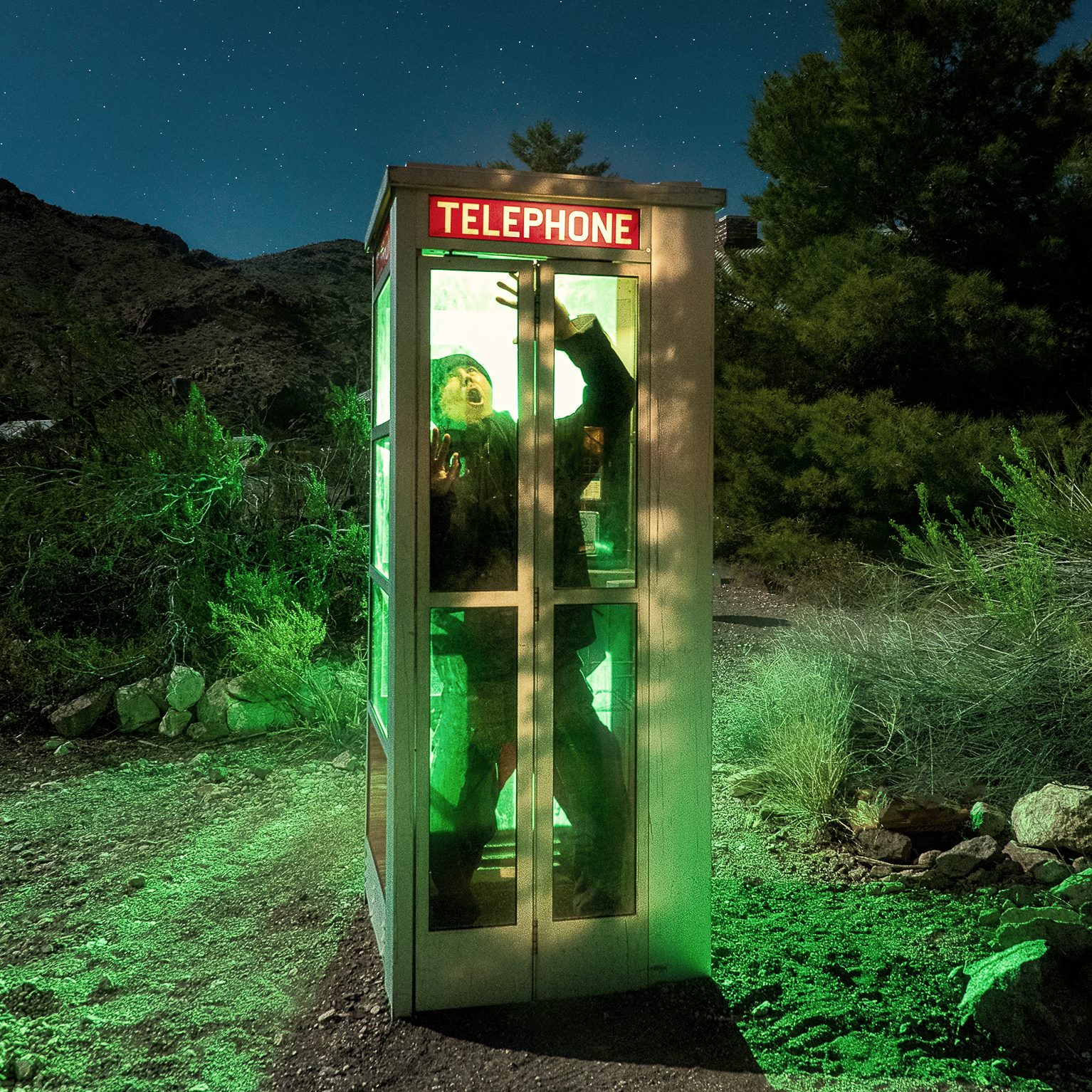
Light painting isn’t just about what you are illuminating. It’s also about shadows. Embrace the flexibility of handheld light painting through the art of shadows.
What is light painting?
The term is often used loosely to describe any addition of light to a night photograph. Really, though, light painting is a technique that uses a handheld light source to illuminate a scene during a long exposure. Your flashlight is your paintbrush, and you are quite literally painting the scene with light. Similar to a film director, you control what you illuminate and what you keep in shadow using your handheld light. Night photographers have used this technique for many decades.
Let’s see how I went about light painting the enormous tank of an oil refinery that has been closed since the 1980s.

Light painting the tank of an abandoned oil refinery
Step one: Fun with shadows
I wanted some long shadows from the staircase. I got as far back as possible so I could backlight the stairway, standing from a single location so the shadows would be as strong as possible. Then I shined my handheld light, slowly illuminating the staircase, making sure to spread the light as evenly as possible. Being careful to have even lighting is just one of the many ways in which light painting is similar to painting.
Step two: A glimpse into the interior
After light painting the stairway, I wanted to illuminate the interior. I actually created two photos. One had no illumination of the interior, keeping everything completely black. The other is what you see in the photo. I preferred this one because it added more interest, offering a small glimpse into the interior and creating more separation than a completely black interior would offer.
I held the light down very low to the ground to create shadow and depth. I used a teal light for this to separate it from the colors outside.
You’ll notice that there’s a little spill of teal light from the interior on the grass below.
Other artistic decisions
Why did I choose a fisheye lens?
It was certainly more challenging to backlight the staircase and create the long shadows with the fisheye lens. After all, it’s far more challenging to not shine the light directly into the lens with a 180-degree lens!
However, I wanted to accentuate the curved railing in the front. I also wanted to exaggerate how far up the stairs go by making the front look extra large, while the visible top of the stairs seemed small, fading away into the night sky.
Creating a clear edge in the opening
I light painted the edge in the opening to create a little edge illumination for the upper part. This separated the edge of the opening from the pitch-black interior of the upper part, adding more texture and interest.
Creative control in your hands
With light painting, you have more creative control than most, if not all, forms of photography. You are the director. You decide where the light illuminates, and what it keeps in shadow. You decide what colors. You decide how long the exposure is. And you decide how to create the depth, accentuate detail, emphasize aspects of the photo, and more. This is all done with your camera and a simple handheld light.